
sell.amazon.com
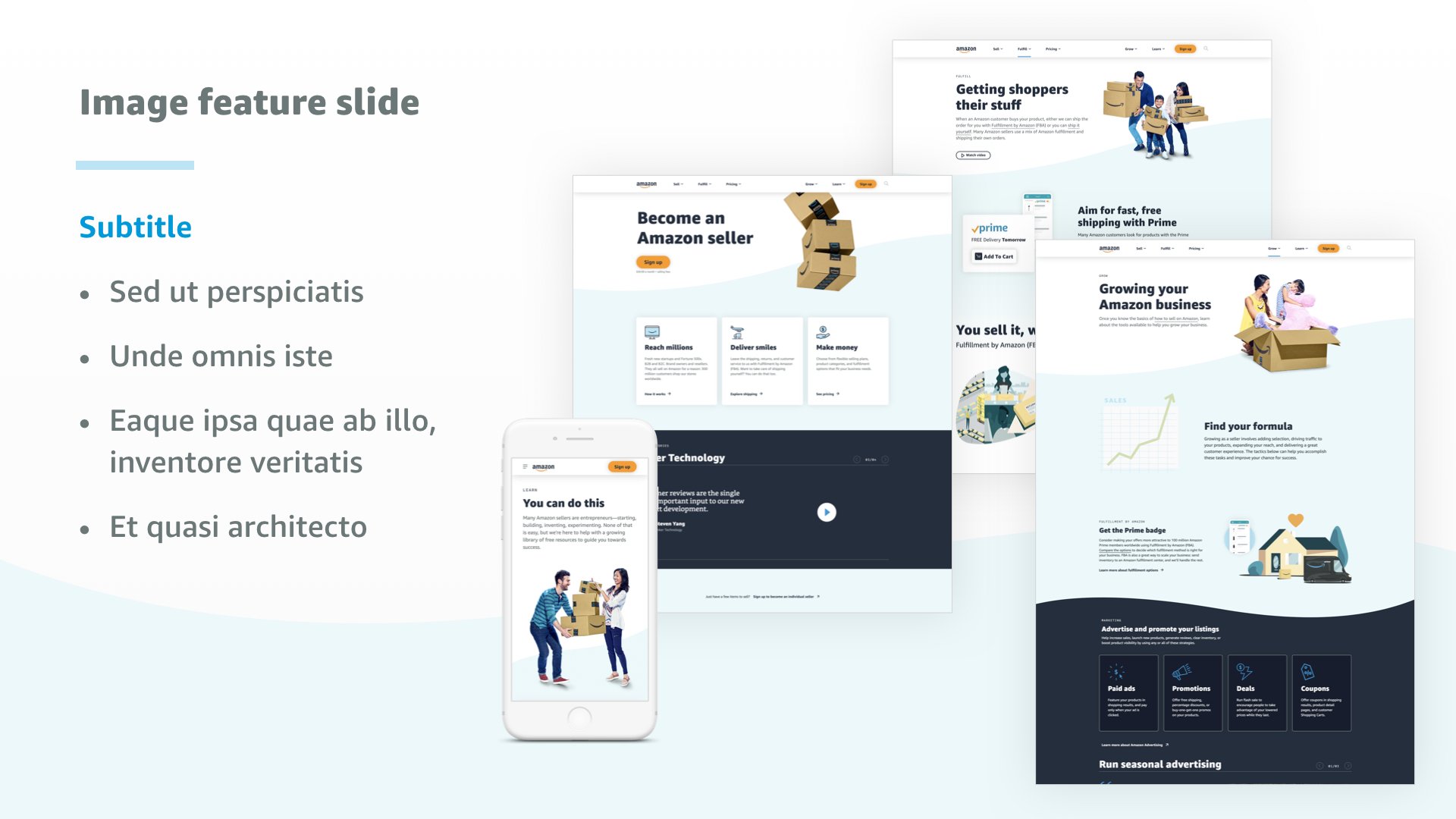
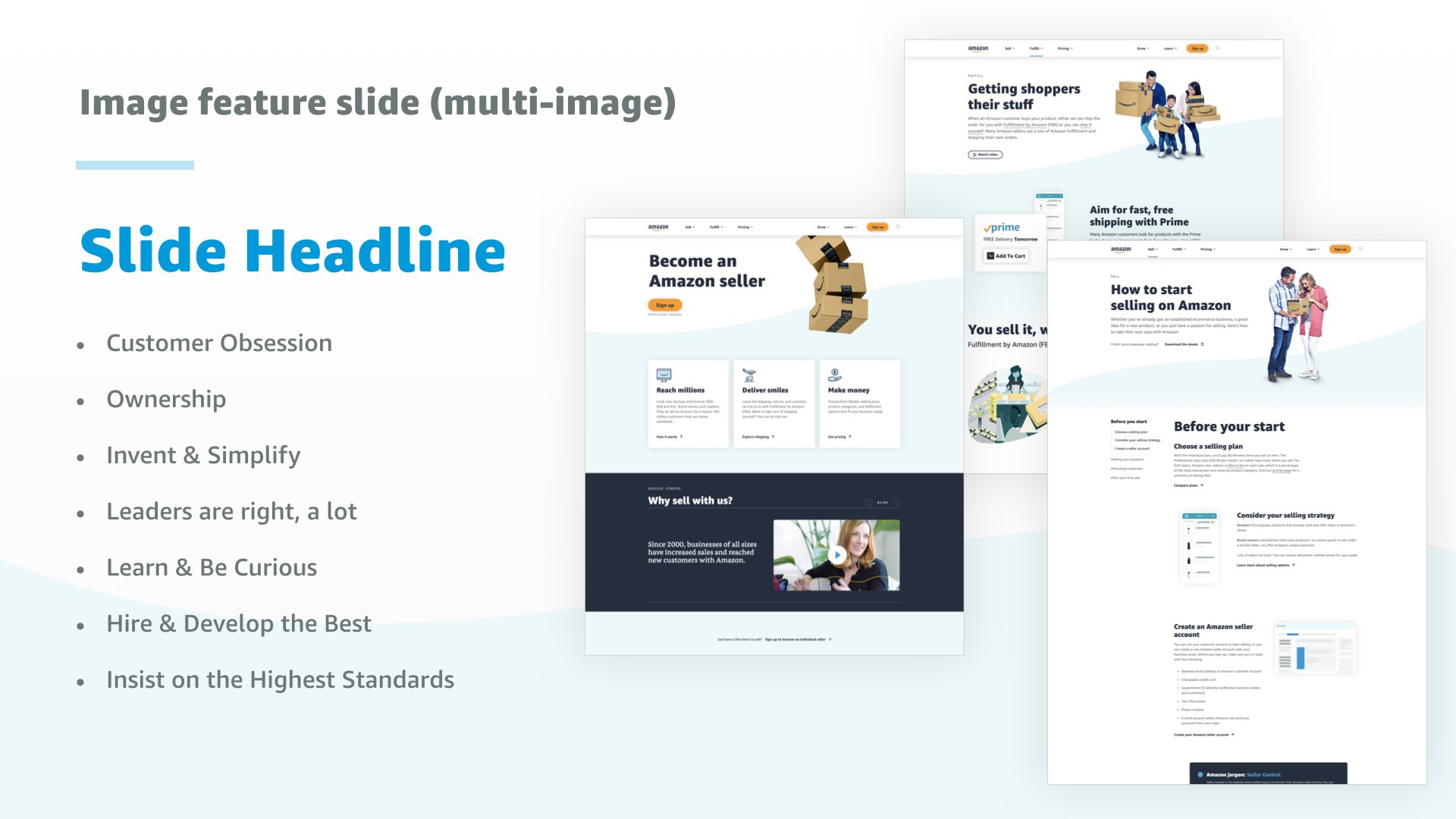
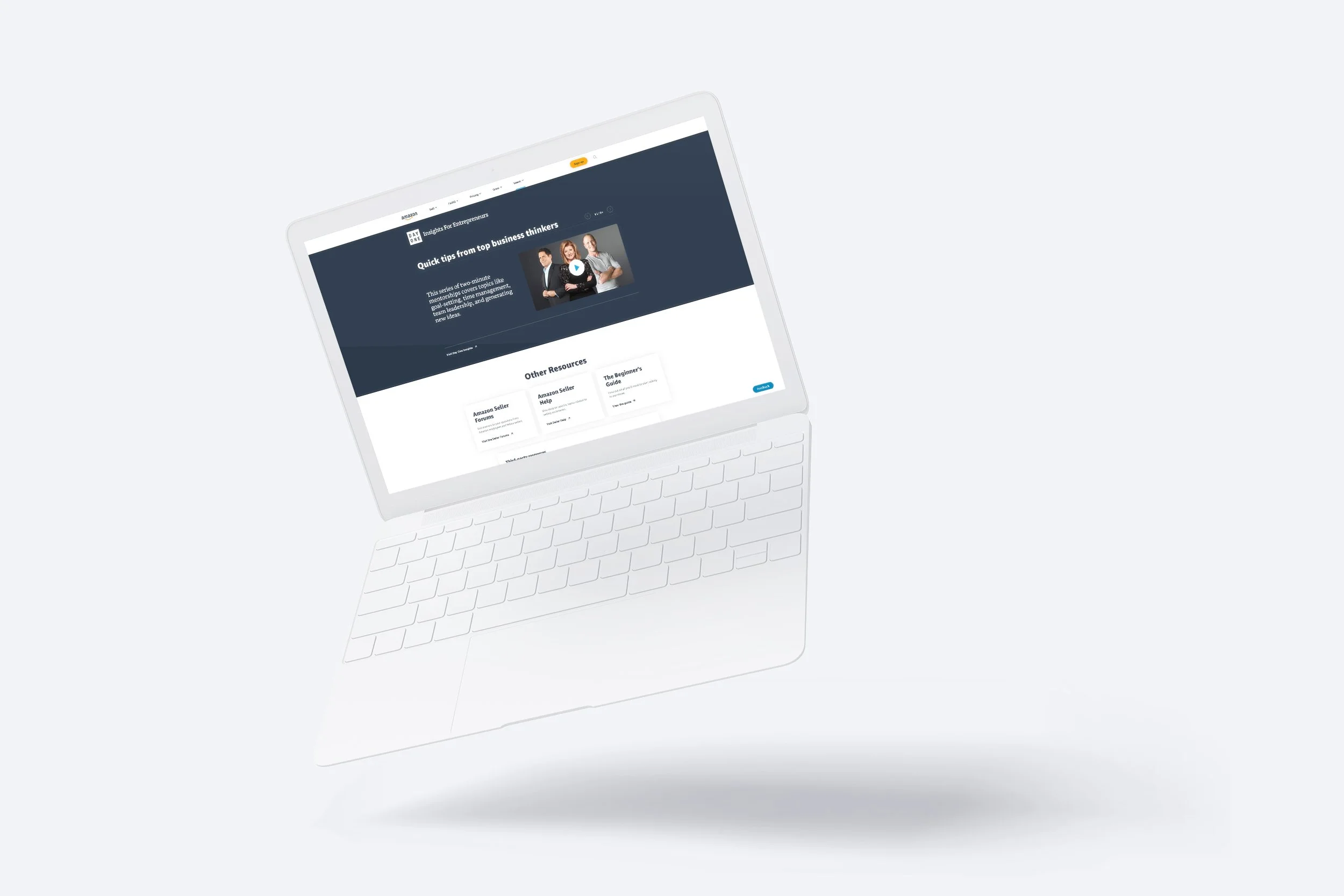
For two years, I worked alongside my design lead to build and maintain the New Seller Success experience on sell.amazon.com. I independently designed and implemented much of the daily web work, while collaborating closely with my design lead to establish the conventions that shaped the broader platform.
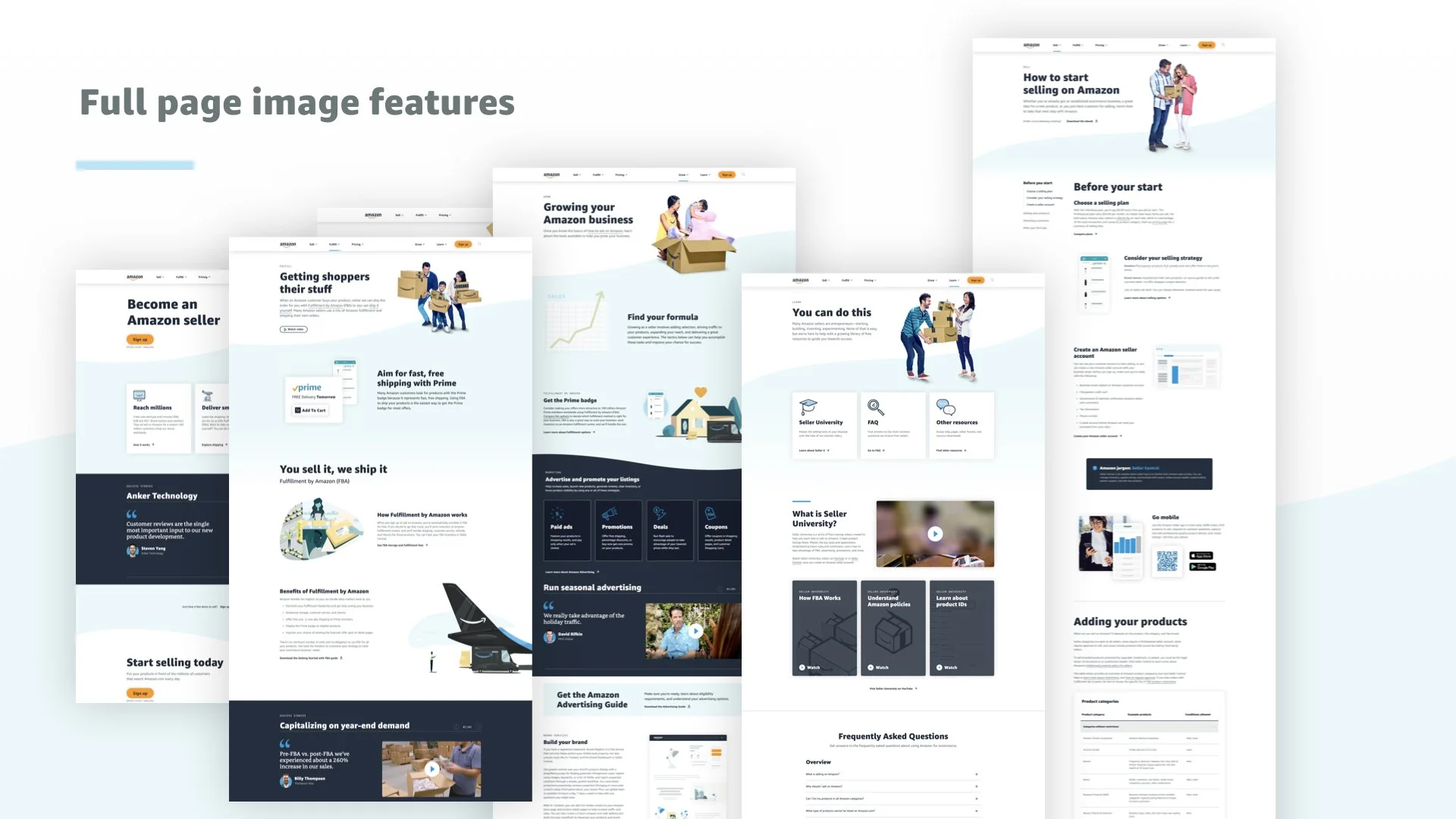
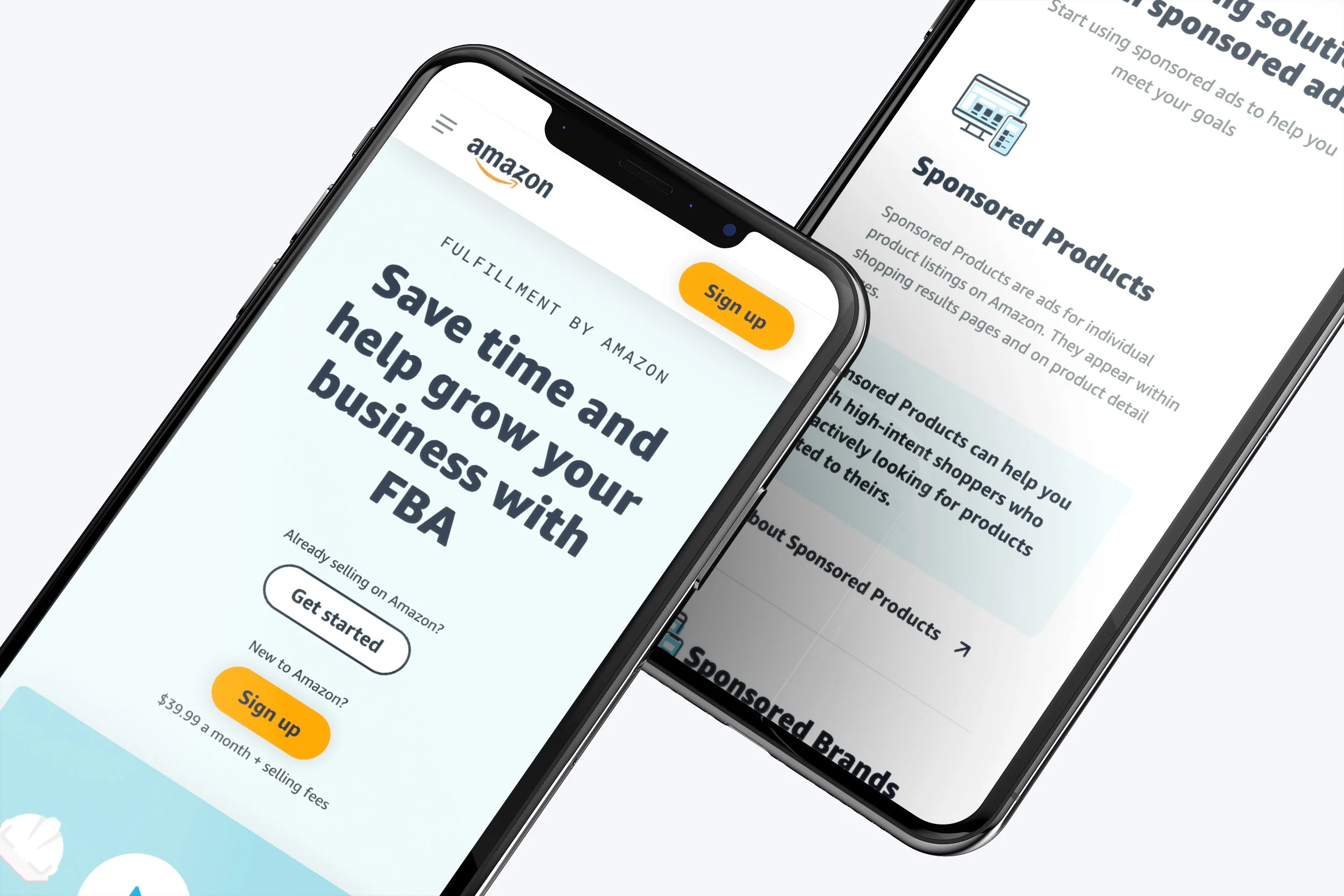
Our small team created hundreds of webpages and thousands of visual assets that helped prospective and developing sellers understand how to start, operate, and grow a business with Amazon.
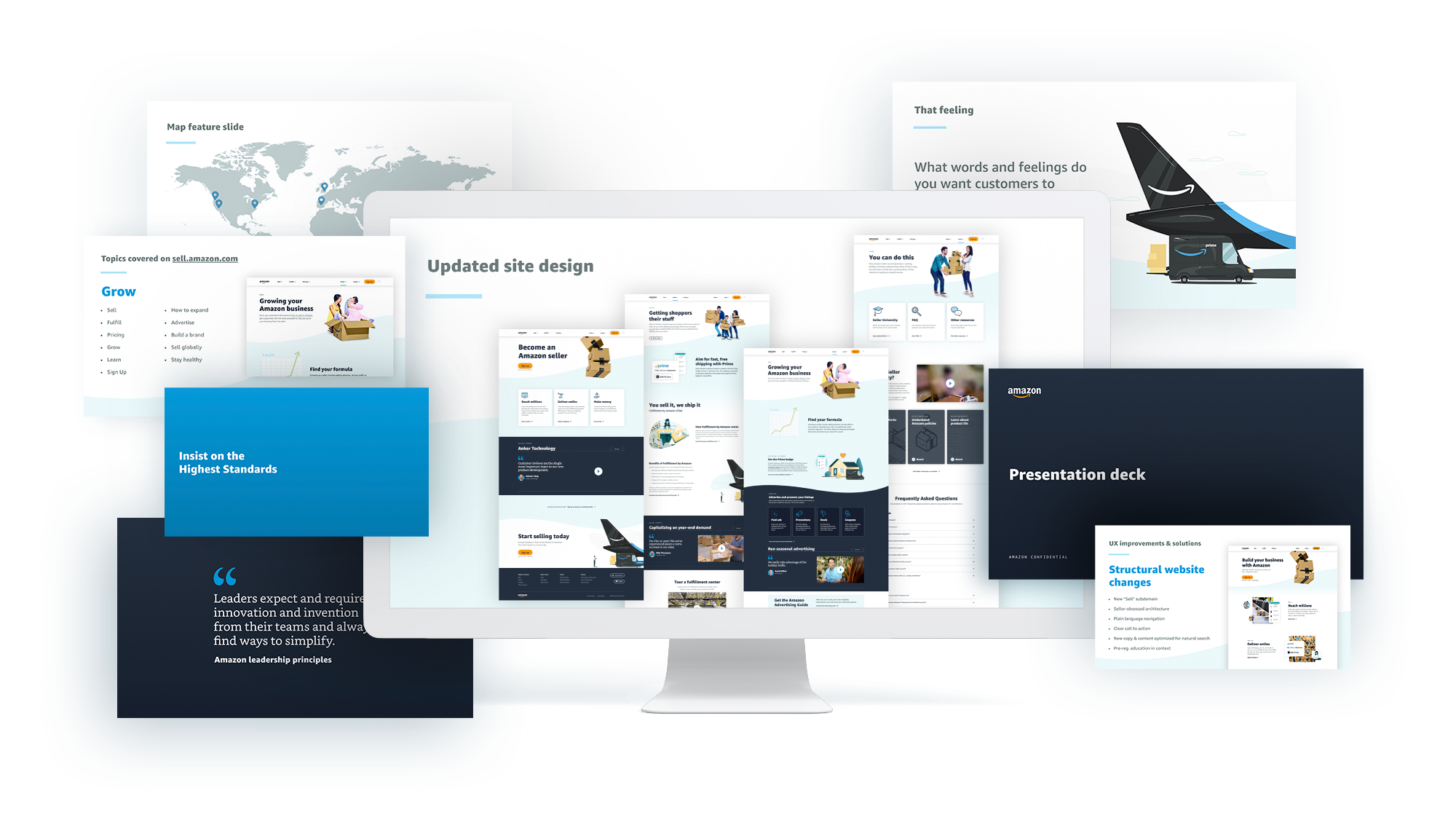
Much of the original Toolkit and internal production work was confidential or has since been retired, so the examples below represent a selection of the broader system I helped build during my tenure.



Overview
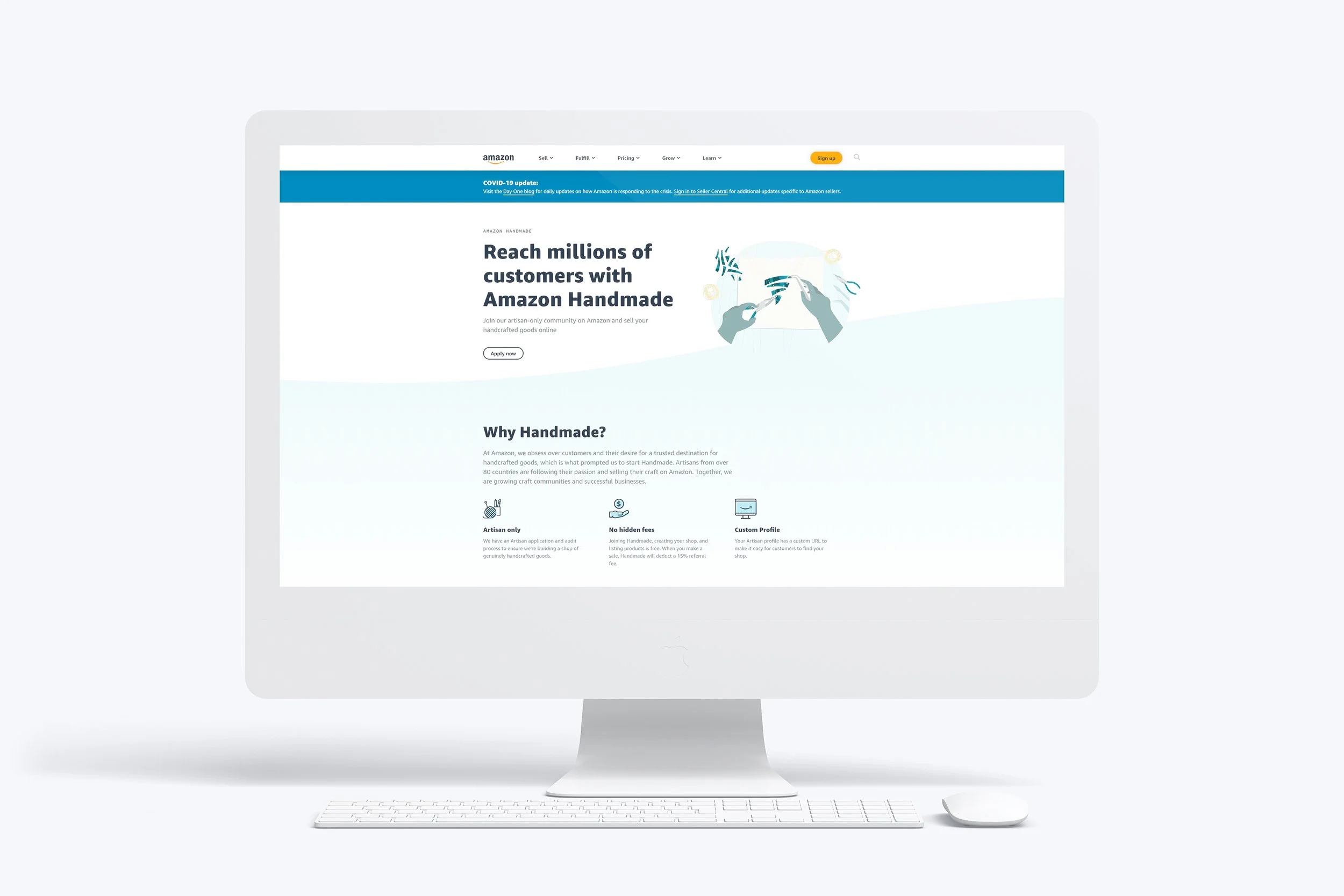
The site served people with very different levels of experience, from someone considering online selling for the first time to an established business exploring new programs, fulfillment options, advertising tools, and international growth. Every page needed to make a large amount of information easier to understand while giving sellers a clear path toward the next decision.
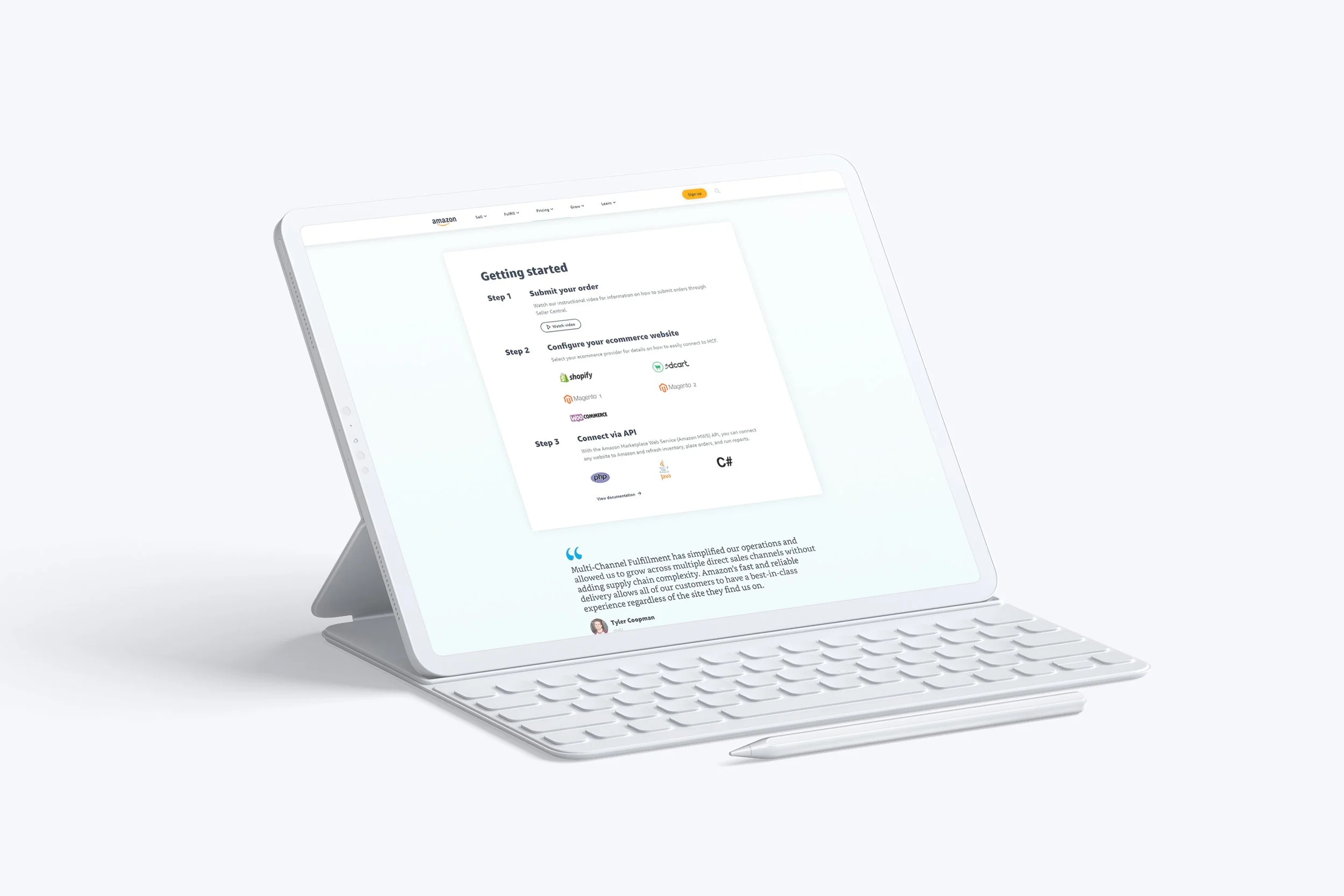
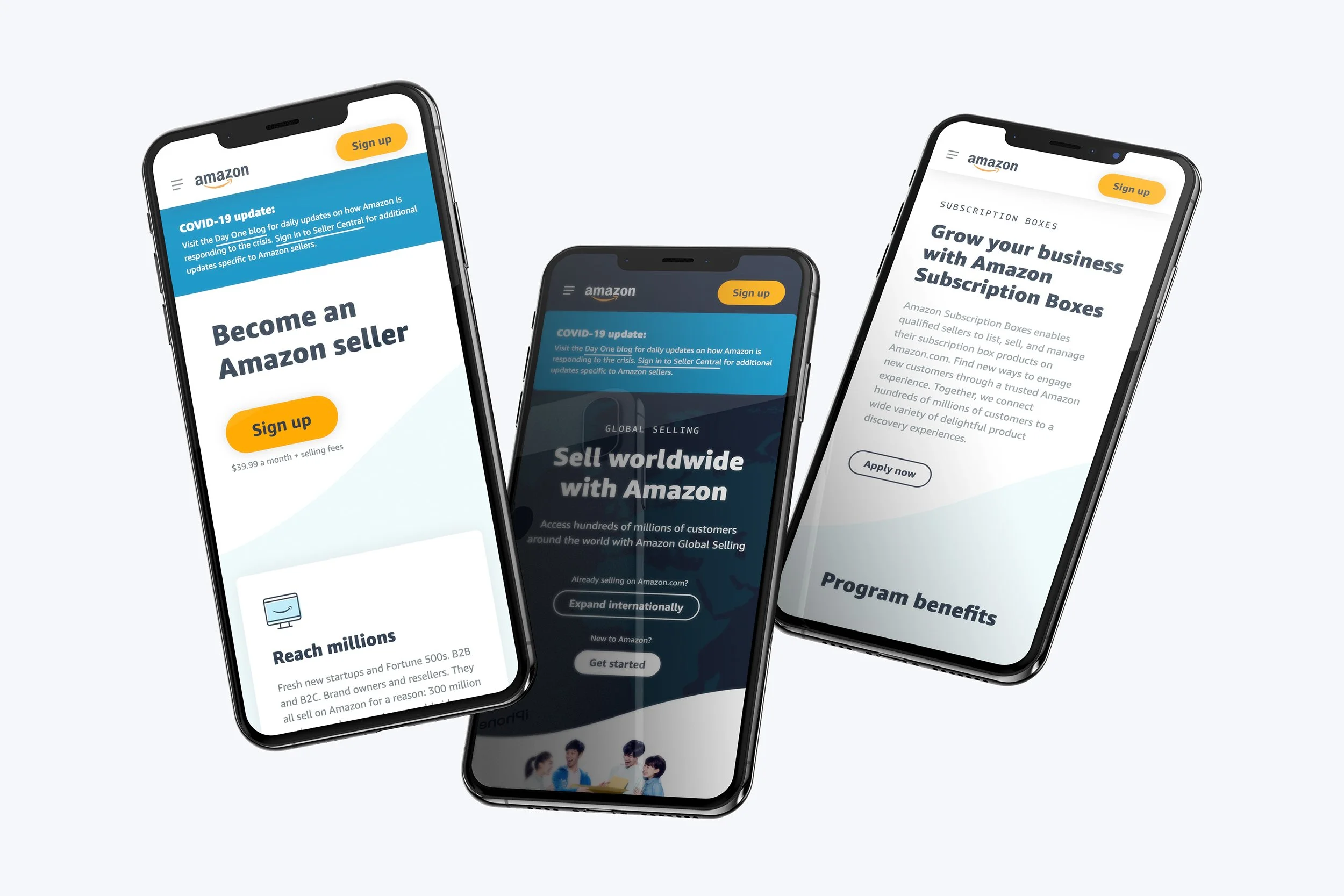
Within the design system my lead and I developed together, I worked independently through much of the daily page production. I designed layouts in Sketch, flowed writer-provided content into clear visual hierarchies, sourced and refined imagery, created icons and illustrations, implemented the pages in LEGO CMS, and owned revisions, responsive QA, final polish, and publishing. Analytics and content partners helped us understand what information sellers needed and which page elements were working, giving our design practice a steady rhythm of review and iteration.
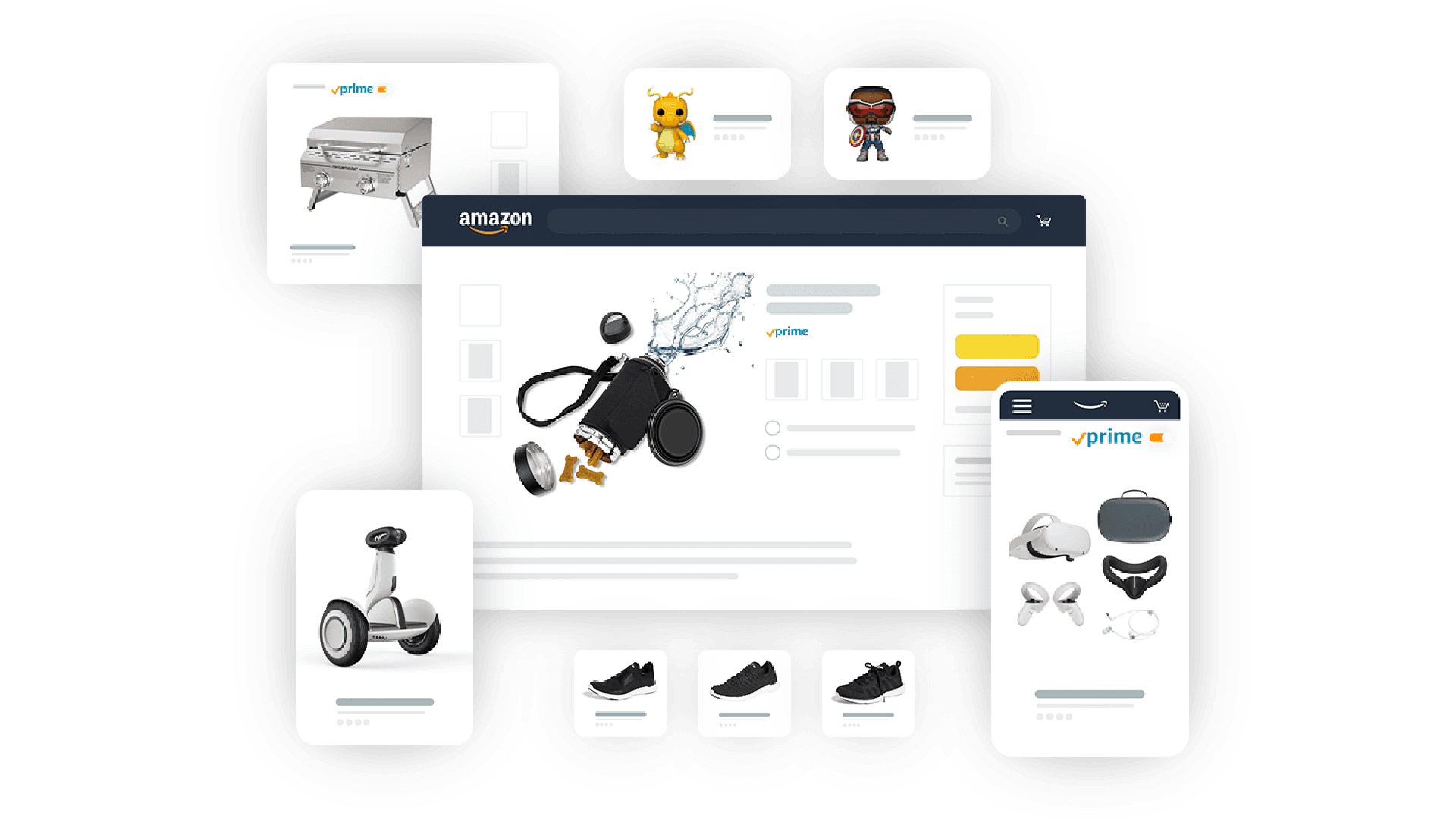
Seller stories were a clear expression of that work. Our writers provided the stories and quotes, while I researched each featured company, sourced its logo and product imagery, performed cutouts and photo editing, and developed a page that represented the seller within the visual language of New Seller Success Marketing. The shared system gave each story a recognizable structure, but the imagery, composition, and supporting details allowed the individual company to remain present. Pages such as Freshly Picked, New Republic, and Hope & Henry show how the same foundation could support businesses with very different products and identities.
From website to global Toolkit
As the U.S. site grew, regional teams regularly requested access to our pages, patterns, and assets. We began turning the full body of our work into a global Toolkit that included brand guidance, full-page JSON templates, reusable CMS sections, icons, illustrations, photography, motion guidance, and implementation-ready assets.
I co-designed the Toolkit with my design lead, personally owning the webpage templates and reusable visual libraries while helping organize the documentation that made them useful. Every net-new page and meaningful design update became an opportunity to strengthen the system. When we created an illustration, refined a responsive pattern, or developed a better content structure, that work could be documented and shared rather than remaining isolated to a single page.
The Toolkit eventually supported all 27 marketplaces within Amazon's global selling ecosystem. Regional designers could begin with responsive, quality-assured templates and adapt the language, imagery, seller stories, and market-specific content for their own audiences. Our team also reviewed localized implementations, helping resolve breakpoint problems, color-contrast issues, and illustration-readability concerns while encouraging each marketplace to work from the shared brand foundation.
The system became valuable to our own team as well. LEGO's clipboard was useful for moving components between pages, but it was not always reliable for permanent storage. After losing several saved snippets, I began exporting my clipboard as JSON, which helped inspire a larger library of reusable code and page patterns. A designer could eventually select an asset or snippet from the Toolkit, copy its link, and place it directly into the LEGO widget they were building.
Reflection
I am proud of the sheer volume of work we created while maintaining a high standard for clarity, usability, and craft. Sell.amazon.com became a robust platform for sellers at different stages of building their businesses, and the Toolkit grew into a record of nearly everything our team had learned and developed along the way.
It was deeply rewarding to create a system that gave our team and designers around the world greater freedom, speed, and reliability. Each documented page, component, icon, illustration, and responsive solution allowed successful work to continue serving people beyond the project where it began.
Condensed Impact
Created and maintained hundreds of webpages and thousands of visual assets
Designed seller stories, campaign pages, reusable components, icons, illustrations, and photography systems
Built and maintained full-page JSON templates and LEGO CMS snippets
Supported localized seller experiences across all 27 global marketplaces
Reviewed responsive implementations and reinforced accessibility and brand guidance
Helped transform a growing website into a reusable global design platform